
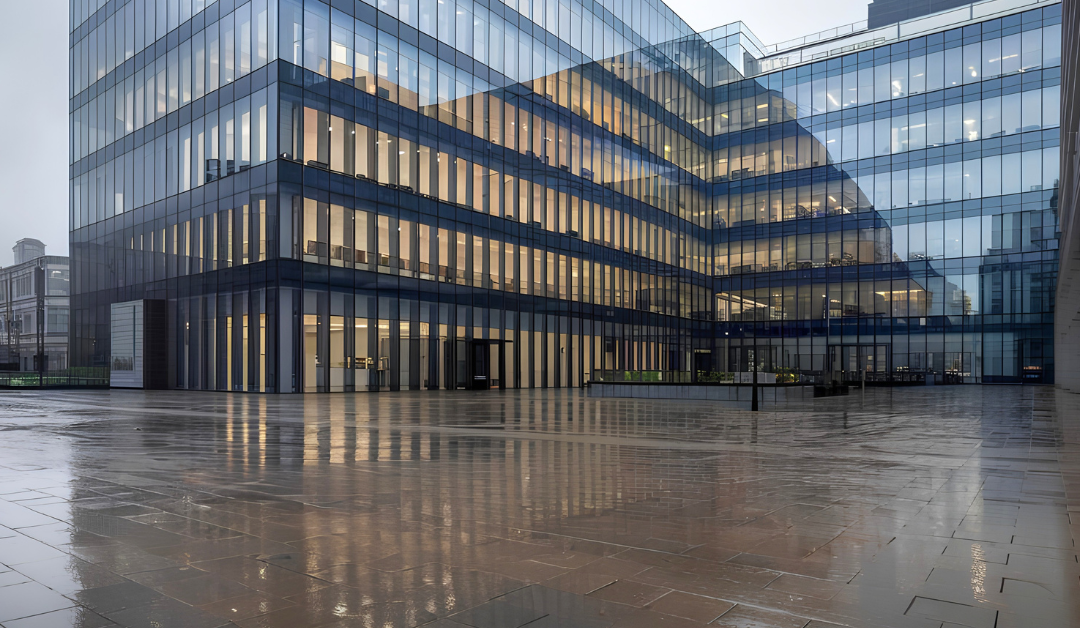
How the UK's weather affects commercial buildings all year round
The weather is one of the biggest influences on the condition of any commercial building. Every day, your property’s exterior is exposed to rain, wind, pollution, UV rays, changing temperatures and organic growth. While these elements may seem harmless in isolation, their combined effect over time can significantly impact the appearance, performance and longevity of a building.
Understanding how different weather conditions affect commercial properties allows facilities managers and property owners to take a more proactive approach to exterior maintenance.
Rain Doesn't Clean Buildings
It’s a common misconception that rain naturally cleans a building.
In reality, rainwater often carries dirt, airborne pollutants and mineral deposits across windows, cladding and facades. As the water dries, it can leave behind streaks, staining and residue that gradually affect the appearance of the building.
Rain also highlights drainage issues. Blocked gutters and overflowing outlets can lead to staining on facades and increase the risk of water damage if left unchecked.
Wind Brings More Than Just Leaves
Wind continually deposits dust, pollen, debris and pollution onto commercial buildings.
In urban and industrial areas, this often combines with moisture to create traffic film—a stubborn layer of contamination that builds up on glazing and external surfaces over time.
Trees can also contribute leaves, seeds and moss to gutters and rooflines, increasing the likelihood of blockages during wetter months.
Moisture Encourages Organic Growth
Areas of a building that remain damp for long periods are far more susceptible to algae, moss, lichen and biofilm.
North-facing elevations, shaded facades and sheltered areas often retain moisture for longer, allowing organic growth to develop more quickly than on sunnier parts of the building.
Aside from affecting appearance, organic growth can make surfaces more difficult to maintain if left untreated.
Sunlight and UV Exposure
While sunshine may seem less damaging, prolonged UV exposure can gradually affect external materials.
Over time, repeated cycles of heat and sunlight contribute to weathering, fading and the natural ageing of external finishes. Buildings exposed to changing temperatures throughout the year also experience expansion and contraction of materials, placing additional stress on seals and joints.
Seasonal Changes Mean Seasonal Challenges
Every season presents its own maintenance priorities.
Spring
- Remove winter grime and pollution.
- Inspect facades after harsh weather.
- Prepare buildings for increased visitor activity.
Summer
- Ideal conditions for exterior cleaning.
- Easier access for planned maintenance.
- Opportunity to tackle accumulated contamination.
Autumn
- Increased leaf fall.
- Greater risk of blocked gutters.
- More debris collecting around rooflines.
Winter
- Persistent moisture.
- Increased runoff staining.
- Higher risk of drainage problems if gutters aren’t maintained.
Rather than reacting to seasonal issues, many organisations benefit from scheduling maintenance throughout the year.
A Planned Approach Delivers Better Results
The weather can’t be controlled—but its impact can.
Regular inspections and planned exterior maintenance help remove contaminants before they cause long-term deterioration. They also ensure drainage systems continue to perform effectively and buildings maintain a professional appearance throughout the year.
A proactive maintenance programme allows facilities managers to budget more effectively, reduce reactive call-outs and protect valuable building assets over the long term.
Supporting Commercial Buildings Across the UK
At Clifton Cleaning Services, we’ve spent more than 30 years helping businesses protect and maintain their properties through professional exterior cleaning.
Whether it’s commercial window cleaning, facade cleaning, gutter clearance, soft washing, rope access or hydraulic platform access, we tailor our approach to the building, the environment and the challenges presented.
Because every building faces the weather.
The difference is how well it’s prepared for it.
Need expert support with your building's exterior?
Contact our specialist team to arrange a no obligation call to discuss how we can help you meet your requirements.
